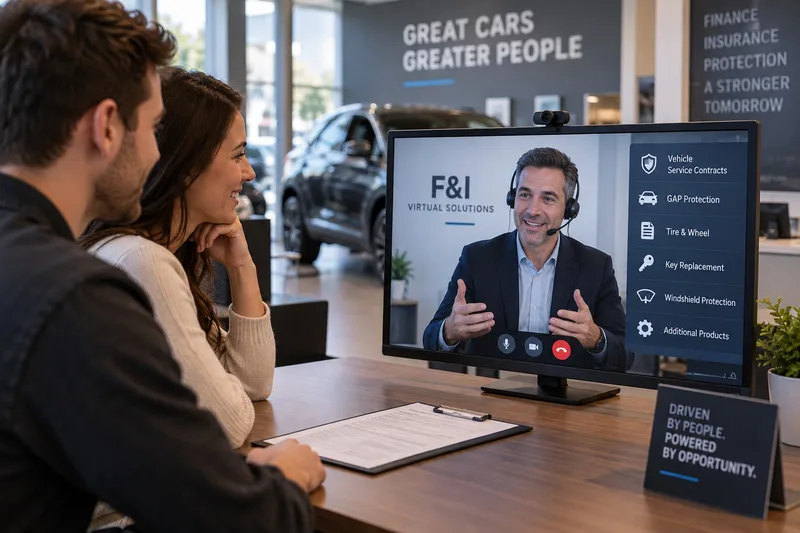
Virtual F&I (Finance and Insurance) is sparking a major operational debate among independent auto dealers, forcing principals to weigh immediate overhead reduction against the long-term value of structured, human-driven talent. As margins compress and digital retail tools blend into the traditional showroom, independent operators face a distinct disadvantage when competing for elite F&I talent. Historically, the traditional finance office functioned as a luxury reserved for franchise networks capable of absorbing high base salaries and steep commission structures. Virtual F&I models offer an alternative, promising on-demand remote managers via secure video feeds to handle lender submissions, structure deals, and present aftermarket menus.
However, behind the technical appeal lies a critical question for industry peers: Does outsourcing your F&I office out-produce a highly trained, physically present team, or does it introduce hidden operational bottlenecks? Below, we break down the data-driven pros and cons of the virtual F&I model for independent dealerships.
The Pros: Efficiency, Consistency, and Margin Optimization
1. Radical Compression of Fixed Personnel Costs
For independent operations averaging 25-50 units per month, personnel overhead represents a volatile financial metric. Attracting a competent, compliant F&I manager requires significant financial underwriting, often including a competitive base, high commission tiers, and employee benefits. If unit volume fluctuates downward, that fixed cost severely damages your net profit per vehicle.
- The Digital Alternative: Virtual F&I operations shift this line item from a fixed overhead cost to a variable, 1099 production expense.
- The Financial Impact: Dealerships pay strictly per closed deal or on a percentage-of-gross structure. This ties F&I expenses directly to active revenue generation and eliminates payroll strain during slower market cycles.
2. Elimination of Presentation Variance and Deal Burnout
In many independent stores, the sales manager or dealer principal handles finance tasks. When showroom floor traffic peaks, busy managers frequently cut corners: skipping protection menus, failing to present ancillary products, or rushing paperwork just to clear the desk.
- Standardization: Virtual platforms utilize dedicated queues where remote professionals treat every customer with identical compliance and performance protocols.
- The Metric Shift: Implementing a mandatory, 100% digital menu presentation counteracts erratic revenue swings. Ensuring every buyer sees VSC, GAP, and ancillary products can raise baseline PVR by several hundred dollars over fragmented, unmanaged in-house processes.
3. Leveraged Lender Portfolios and Advanced Compliance Security
Navigating the modern lending ecosystem demands comprehensive focus. Independent dealers often struggle to maintain active status across a wide spectrum of prime and subprime institutions. Virtual F&I providers function as centralized clearing houses, leveraging massive aggregate volume to command faster tier approvals and flexible bank stipulations. Furthermore, under modern regulatory pressures, a digitized, recorded, and auditable remote pathway minimizes compliance liability, mitigating documentation errors and costly buy-backs.
The Cons: Local Bottlenecks and Execution Friction
Extreme Vulnerability to On-Site Operational Disorganization
A remote F&I manager is entirely dependent on the physical staff inside your building. They cannot step out to the lot to verify a missing VIN, track down proof of residence, or collect a down payment check.
- The Friction Point: The virtual model completely deteriorates if your local sales staff lacks administrative discipline.
- The Reality: Local personnel must act as precise deal-jacket processors: scanning clean documents, gathering accurate stipulations, and managing physical signatures. Without an agile on-site team, the handoff stalls, lengthening your time-to-close and frustrating buyers.
High Upfront Tech Capital and Internal Culture Resistance
Transitioning a legacy independent store into an integrated virtual node requires more than standard internet. It demands an upfront financial investment in high-def video displays, secure document imaging hardware, and real-time screen-mirroring software. Beyond the capital expense, internal cultural hurdles are real. Traditional floor salespeople often struggle to transition relationships to a remote expert on a screen. If your sales team perceives the digital menu process as an intrusive impediment, they will subtly redirect buyers away from finance alternatives, driving down penetration rates.
Shifting State Regulations and Funding Red Tape
While digital contract execution has matured, the regulatory framework governing title processing, remote wet-ink requirements, and out-of-state consumer disclosures remains inconsistent. Dealerships doing high-volume digital or cross-border sales must navigate a complex patchwork of state-specific guidelines. If an outsourced virtual provider fails to dynamically adapt to local DMV or attorney general quirks, the resulting contractual rejections can cause funding delays that compromise your cash flow.
The Verdict: Virtual vs. Trained Professional Teams
Ultimately, virtual F&I is an operational tool, not an absolute cure-all. If your dealership features a disciplined sales desk with the infrastructure to process clean, digital deal jackets, an outsourced virtual solution can successfully scale your margins while dropping fixed personnel costs.
However, reliance on a remote interface cannot entirely substitute for deep-seated, professional expertise. For many dealerships, the ultimate profit engine isn’t found by outsourcing the department, but by securing top-tier vehicle protection products and elevating the capabilities of your team to execute flawlessly on the showroom floor.
Optimize Your F&I Performance with ARC
Whether you are considering transitioning to a virtual F&I framework or looking to maximize the profitability of your current on-site team, the differentiator always comes down to execution, training, and the quality of your product portfolio. At ARC, we serve as a comprehensive F&I partner, providing dealerships with industry-leading warranty solutions paired with elite, hands-on F&I training. We equip your automotive professionals with the advanced compliance strategies, menu presentation techniques, and lender-management skills required to maximize backend gross and drive peak PVR.
Want to audit your current F&I performance metrics or explore how targeted training and premium warranty products can outpace an outsourced model? Reach out to me today to start a conversation about your F&I department and discover how ARC can help unlock your store’s true profit potential.
Frequently Asked Questions
What is virtual F&I?
Virtual F&I is a model where a remote finance and insurance manager, connected by secure video, handles lender submissions, deal structuring, and menu presentation from off-site instead of a manager physically working the desk at the dealership.
Is virtual F&I cheaper than hiring an in-house F&I manager?
It shifts F&I cost from a fixed payroll expense (base salary, commission tiers, benefits) to a variable, per-deal or percentage-of-gross cost. That can lower overhead during slower unit-volume months, but the savings depend on the dealership's local team executing the deal-jacket process cleanly on their end.
What's the biggest risk of switching to virtual F&I?
The model depends entirely on the physical staff on-site. A remote manager cannot walk the lot to verify a VIN, collect a down payment check, or track down a missing document, so if the local sales team lacks administrative discipline, the handoff stalls and time-to-close lengthens.
Does virtual F&I hurt menu presentation and product penetration?
It can go either way. Standardized virtual queues can actually raise consistency, since every customer gets the same digital menu presentation instead of a busy manager skipping products to clear the desk. But if the sales team treats the remote expert as an intrusive extra step, they may quietly steer buyers away from finance products, which lowers penetration.
Are there compliance risks with virtual F&I across different states?
Yes. Title processing, wet-ink signature requirements, and out-of-state consumer disclosure rules vary by state and remain inconsistent for digital contracts. A virtual provider that doesn't adapt to local DMV or attorney general requirements can cause contract rejections and funding delays.
Should an independent dealership use virtual F&I or invest in an in-house team?
It depends on whether the store already has a disciplined, well-equipped sales desk. Virtual F&I can scale margins and cut fixed costs where that infrastructure exists, but for many independent dealers the bigger profit driver is training the in-house team and securing stronger vehicle protection products rather than outsourcing the department entirely.