How Do You Choose the Right Dealer 20 Group?
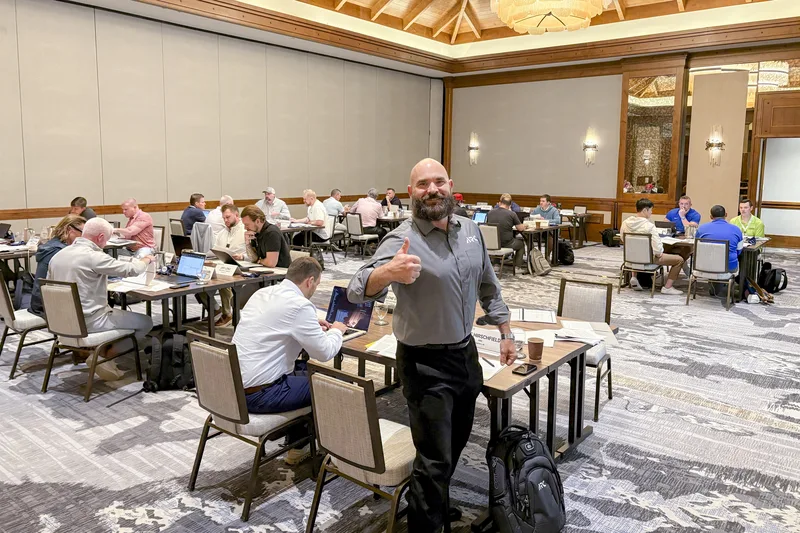
Choosing the right dealer 20 Group comes down to the room: who sits at the table, how the numbers get compared, and who keeps the conversation honest. If the other dealers run stores you can learn from, the financials are benchmarked the same way for everyone, and a moderator holds the group to what it commits to, you are in the right place. Location, agenda and dues matter, but they come second.
A 20 Group is a group of dealers from non-competing markets who open their financial statements to each other, compare results, and talk about what is working and what is not. The format sounds simple. What makes it pay off is the quality of the people and the discipline of the process.
Dealers often shop for a group the way they shop for a conference. They look at the dates, the city and the price. That is backward. You are not buying an event. You are buying a seat at a table, and that table is what you will be working with every time the group meets.
So start with the room.
Who Should Be Sitting at the Table With You?
The first thing to find out is whether the other dealers run stores close enough to yours that their numbers mean something. A small independent lot and a high-volume franchise store can learn from each other. They should not be benchmarking gross per unit against each other line by line.
You want peers who are similar enough to compare and different enough to teach you something. Similar size, similar business model, similar challenges. Then you want a mix of strengths. The dealer whose service department carries the store and the dealer whose F&I office is running strong both have something to give the rest of the group.
Just as important, they cannot be your competitors. The whole value of a 20 Group is that people tell the truth. Nobody is going to share what their used car department really did last quarter with the dealer down the road. Non-competing markets are what make that honesty possible.
Last, look at commitment. A room where half the members skip meetings or show up without their numbers turns into a lunch. A room where everyone comes prepared, with financials submitted and last meeting's action items in hand, turns into a working session.
Are the Numbers Being Compared Apples to Apples?
Benchmarking only works if everyone's numbers are built the same way. If one store books reconditioning into inventory cost and another expenses it, their used car gross will not line up. The comparison will send somebody chasing the wrong problem.
That is why the financial side of a group deserves as much scrutiny as the people. Ask how statements are collected, how they are standardized, and what you actually see when the reports come back. You should be able to look at your store next to your peers department by department: new, used, service, parts, F&I and expenses.
At ARC, our 20 Groups run on LinuS®, our financial benchmarking software. The point of a tool like that is not the software itself. The point is that when the group sits down, nobody is arguing about whose numbers are right. The conversation goes straight to why one store is getting more out of a department than another, and what the rest of the room can take home.
When the numbers are clean, the profit you are leaving on the table gets a lot easier to see. Sometimes it is sitting in a department you were sure was fine.
What Does a Good 20 Group Moderator Actually Do?
A 20 Group without a strong moderator is a room full of smart people talking past each other. The moderator is the one who reads every statement before the meeting, knows where each store is soft, and steers the discussion toward the things that will actually move your numbers.
A good moderator also asks the uncomfortable question. If your service absorption has slipped meeting after meeting, somebody needs to say so out loud and ask what you plan to do about it. Your managers may not. Your peers might be too polite. The moderator's job is to not let it slide.
Then there is follow-through. The commitments a dealer makes at a meeting are worth nothing if nobody checks on them. The moderator should be keeping track of what each member said they would change and bringing it back up next time.
That is how I approach the job as an Executive 20 Group Moderator at ARC, and it is how Roy, our other Executive 20 Group Moderator, approaches it too. We are not there to run a slideshow. We are there to know your numbers well enough to act like an advisor inside your store, one who also knows what a room full of your peers is doing.
When you are evaluating any group, ask to talk to the moderator. Ask how they prepare, how they handle a member who is struggling, and how they keep the group accountable. You will learn a lot in ten minutes.
Do Franchise Dealers Need a 20 Group if the OEM Already Runs One?
Franchise dealers have more options than independents. Many manufacturers run their own 20 Groups, and dealer councils sit on top of that. So it is fair to ask whether an outside group adds anything.
An ARC 20 Group is not a replacement for any of that. It is a complement. An OEM group puts you in a room with dealers of the same brand, which is useful for brand-specific questions. A dealer council gives you a voice with the factory. Both have their place.
What an independent group can add is a different set of peers and a different set of conversations. You may be sitting next to dealers who run other brands, or who run a strong used car operation alongside their franchise. The focus stays on your store's profitability across sales, service and F&I, without the agenda being built around one manufacturer's programs.
If you already belong to an OEM group, the question is not either/or. It is whether a second room, with different peers and a moderator focused on your whole store, would show you something the first one has not.
For independent dealers, the question is simpler. You do not have a factory group to lean on, so the room you choose may be the main place you get an honest comparison with stores like yours.
What Should You Ask Before You Join a 20 Group?
Before you sign up anywhere, get clear answers to these questions:
- Who else is in the group, and how similar are their stores to mine?
- Are all members in non-competing markets?
- How are financial statements collected and standardized for comparison?
- What will I see in the benchmarking reports, and how often?
- Who moderates, and how do they prepare for each meeting?
- How does the group track commitments between meetings?
- Can I talk to a current member about what they have gotten out of it?
The Room Is the Decision
Choosing a dealer 20 Group is not really about the group's name or the meeting schedule. It is about whether the dealers at the table, the numbers in front of you and the moderator running the session will push your store to perform better.
If the answers to the questions above are vague, that tells you something. A group that runs well can explain exactly who is in the room, how the numbers are built and how members are held accountable.
Be honest about your side, too. A 20 Group asks you to share real numbers and take hard feedback. If you are ready for that, find the room that will put it to work. To see how ARC 20 Groups are put together, start here or reach out to our team.
Frequently Asked Questions
What is an automotive dealer 20 Group?
A dealer 20 Group is a peer group of dealers from non-competing markets who share their financial statements, compare performance and talk through what is working in their stores. The goal is to find profit opportunities across sales, service and F&I by learning from peers who run similar operations.
How do I choose the right 20 Group for my dealership?
Start with who is in the room: dealers with comparable stores in non-competing markets who show up prepared. Then look at how the financials are standardized for comparison and who moderates the group. Dates, location and dues matter, but they come after those three things.
Can franchise dealers join an ARC 20 Group if they are already in an OEM 20 Group?
Yes. ARC 20 Groups are designed to complement OEM-run 20 Groups and dealer councils, not replace them. An ARC group gives franchise dealers a different set of peers and a moderator focused on the profitability of the whole store.
What is LinuS®?
LinuS® is ARC's financial benchmarking software, and it powers ARC 20 Groups. It lets members compare their store's numbers with peer dealers on a consistent basis, so meeting time goes to solving problems instead of reconciling statements.
What does a 20 Group moderator do?
A moderator reviews each member's financials before the meeting, guides the discussion toward the issues that matter most, and holds members accountable for the changes they commit to. A strong moderator acts like an advisor who knows both your numbers and what your peers are doing.
Are ARC 20 Groups only for franchise dealers?
No. ARC works with both independent and franchised dealerships. Independent dealer principals and GMs use ARC 20 Groups to benchmark against comparable stores and find profit across sales, service and F&I.