How a Battlefield Defeat in 1806 Gave Rise to the Most Powerful Learning Model in History
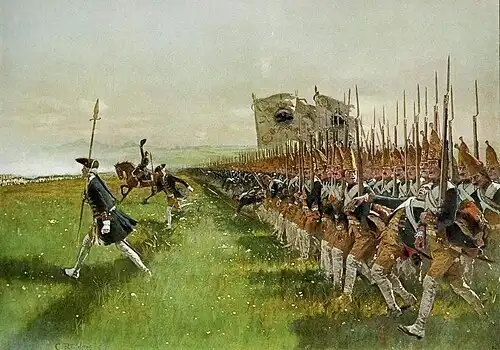
On October 14, 1806, Napoleon Bonaparte destroyed the Prussian army at the twin battles of Jena and Auerstedt. It wasn’t close. Within weeks, a force that had been considered among Europe’s finest was shattered, and Prussia itself was effectively a satellite of France.
The humiliation forced a reckoning. Prussian officers had been promoted by social class and family connections, not merit. Military doctrine had been frozen in the era of Frederick the Great, strategies that had won wars a generation earlier were being applied without critique, without challenge, and without update. And critically, the army had no system for learning.
Senior officers made decisions in isolation. There was no mechanism for sharing what worked, questioning what didn’t, or holding one another honestly accountable.
The disaster changed all of that. And what Prussia built in the years that followed became the template for professional education used by every major military in the world, including the United States Army, for the next two hundred years.
It also, without anyone planning it that way, looks remarkably like a 20 Group.
Scharnhorst’s Insight: Learning Is Not a Solo Sport
The officer tasked with rebuilding Prussia’s military after Jena was Gerhard von Scharnhorst, a general’s general who had been writing about the professionalization of military knowledge for decades. His diagnosis was sharp: the Prussian army had failed not because of inferior soldiers or weapons, but because of an institutional culture that isolated leaders from each other and suppressed honest feedback.
His reforms, developed with a small circle of like-minded officers including August von Gneisenau, Karl von Grolman, and Hermann von Boyen, attacked that culture directly. Promotion would be based on merit, not birth. Officers would be assessed anonymously on whether they demonstrated understanding, not rote memorization.
Most radically, the new Prussian War Academy would be built on what Moltke later described as “an active process of mental give and take between teacher and pupils, so as to stimulate the pupils to become fellow-workers.”
That phrase deserves to sit with you for a moment. The whole point was not to transmit knowledge from superior to subordinate. It was to build shared understanding through peer engagement. The teachers were also learning. The pupils were also teaching. The value came from the friction between different minds working on the same problems.
Scharnhorst also introduced something that had never been formalized before: the Kriegsspiel, or war game. Groups of officers gathered around detailed topographic maps, took command of opposing forces, and made decisions under uncertainty, with a moderator adjudicating outcomes and obscuring what each side could see.
At the end of every session, the group reviewed what happened together: what was planned, what actually unfolded, and why.
Sound familiar? The Prussians were running after-action reviews in the 1820s.
The General Staff took this further with Stabs-Reise, or staff rides. Moltke would take his officers to the actual ground where future battles might be fought. They walked the terrain, analyzed the options, and then, formally, critiqued each other’s thinking in front of the group.
The physical site was the context. The peer critique was the education.
Why It Worked: Shared Understanding, Not Shared Orders
The intellectual core of all of this was a doctrine later called Auftragstaktik, mission-type tactics, or what the U.S. Army today calls Mission Command. The idea is deceptively simple: tell a subordinate commander what you need accomplished and why, give them the resources to do it, and then trust them to figure out how.
But here’s the catch. That only works if every commander in your organization has internalized the same framework for thinking about problems. You can’t grant independence to someone who doesn’t share your mental model of the situation.
Distributed decision-making requires shared understanding, and shared understanding cannot be built through memos and orders. It has to be built through conversation, challenge, and collaborative learning.
That is why the war games, the staff rides, the peer critiques, and the small-group seminars were not supplements to Prussian military education. They were the whole point.
Prussia won its stunning victories in 1866 and 1870–71 not because it had better weapons or more soldiers, but because it had leaders at every level who had been trained to think through hard problems together.
“Prussian forces were more often than not outnumbered, weapon advantages were mixed, and training methods were similar… at this time, the Prussian military had a monopoly on second-generation wargaming and had integrated it into its staff education.”
Every major military in the world, Britain, Russia, Japan, France, and the United States, scrambled to build their own versions of the Prussian model in the years after 1871.
The U.S. Army’s answer was the Command and General Staff College at Fort Leavenworth, founded in 1881 by William Tecumseh Sherman, and the Army War College, established in 1901 by Secretary of War Elihu Root after the Spanish-American War exposed the same institutional weakness that Jena had exposed in Prussia nearly a century earlier.
Walk into a seminar at Fort Leavenworth or Carlisle Barracks today. You will find small groups of 16 to 18 officers from different branches, different career backgrounds, and different countries, deliberately mixed to maximize intellectual friction. They study historical cases. They war-game current scenarios. A colonel may be challenged by a major. Rank is consciously set aside in favor of the quality of the argument.
The entire architecture is designed to build shared mental models through honest peer engagement.
That design traces in an unbroken line back to Scharnhorst’s reform commission in 1807.
The Same Problem, a Different Battlefield
Here is the thing about running a business, particularly a dealership: it can be profoundly isolating.
You make decisions with imperfect information. You receive feedback from employees who depend on you for their livelihoods, which limits their candor. You can hire consultants, but no consultant has their own skin in your game.
You have a gut feel for how you’re doing, but gut feel is notoriously susceptible to the same confirmation bias that got Prussian officers killed at Jena. You think you’re doing well until someone shows you, with actual numbers, that you’re leaving significant performance on the table.
The 20 Group format traces back to 1945, when a group of Ford dealerships figured out, somewhat by accident, the same thing Scharnhorst figured out in 1807: the most powerful source of learning available to you is a group of peers working on the same problems you are, who have no reason to flatter you, and are willing to be honest.
The mechanisms are different. The principles are identical.
The financial composite, a benchmarking report that shows each member’s performance against the group average, the group high, the group low, and comparable dealers nationwide, is the business equivalent of the Kriegsspiel’s hidden information revealed. You cannot argue with it. You cannot rationalize it away.
When you see that someone in your peer group is running 15 more gross-margin points than you on the same product line, that isn’t abstract advice. It is proof that a better outcome is achievable, and it resets what you believe is possible for your own operation.
ARC’s proprietary platform, LinUs®, is built specifically to deliver this kind of clarity, benchmarking data tailored to your group, not generic industry averages.
The onsite review, where the entire group spends time walking through a host member’s dealership, asking questions and observing what’s working behind the scenes, is a staff ride. The physical context is the dealership itself. The peer critique is the education.
The meeting itself, non-competing peers, a professionally credentialed moderator, a structured agenda, and the expectation that you will both share what you know and be held accountable for what you committed to last time, is the small-group seminar.
ARC’s moderators, including Justin Osburn, Cory Collins, Jason Caley, and Rob Whistle, bring more than 80 combined years of real-world dealership experience across sales, F&I, and fixed operations.
They don’t moderate from a script. They moderate from having lived the same problems the room is trying to solve. That is the Kriegsspiel umpire, not the source of all wisdom, but the keeper of the process that produces it.
And the long-term relationships, the trusted peers who understand your challenges because they are living versions of the same challenges, produce exactly what Auftragstaktik produced: a shared framework for thinking through problems that compounds in value over time.
“Every meeting is productive, seamless, and meaningful. Your professionalism, responsiveness, and genuine care for our growth and success do not go unnoticed.”
“Justin and his team put together a top-notch experience every time.”
That kind of sustained engagement is not an accident. It is what happens when the structure is right, when the people in the room are genuinely invested in each other’s outcomes, and when the data makes it impossible to avoid the truth.
What This Means for You
The Prussians didn’t invent peer learning because they were enlightened. They invented it because they got beaten badly enough that they had no choice but to ask hard questions about how they were developing their leaders, and to be honest about the answers.
Most business owners never have a Jena moment. They grow steadily, hit plateaus they attribute to market conditions, and never quite know how much they’re leaving on the table by operating without an honest external mirror.
The 20 Group is that mirror. It is also the room where you get to be the person someone else learns from. And over time, it becomes a network of peers who know your business the way general staff officers knew each other’s, with depth, candor, and genuine investment in each other’s success.
At ARC, we have built seven active dealer groups, Zeus, Poseidon, Nike, Artemis, Achilles, Adonis, and Athena, each carefully segmented by dealership size, leadership role, and operational focus.
The Greek names are a nod to the timeless nature of the model: structured peer learning under pressure, with experienced guides and real stakes. Ninety-eight percent of dealers who attend their first ARC 20 Group meeting join. That number is not a marketing claim. It is what happens when the format is right and the room is full of the right people.
One thing ARC is particularly proud of: ARC is one of the few 20 Group providers in the country with a deep commitment to independent dealers. For too long, independent operators have been underserved by the peer benchmarking world. We built ARC’s 20 Groups to change that.
Prussia built an institution. The U.S. Army built on it. The dealership industry stumbled onto the same idea eighty years ago and has been proving it ever since.
The underlying principle has not changed in two centuries: the leaders who learn together, outperform.