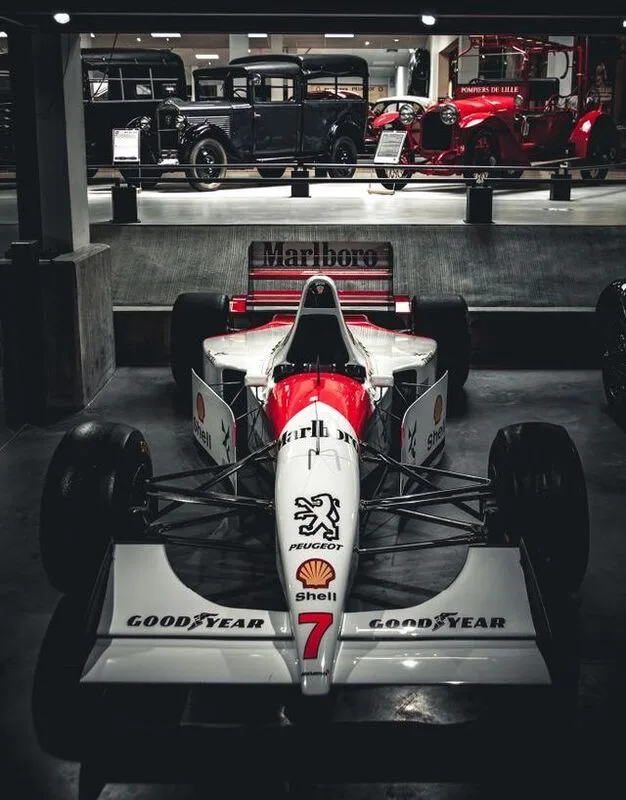
Roger Penske did not build one of the most successful racing and business empires in American history by operating in isolation. His philosophy, applied consistently across decades of competition, rests on a single disciplined principle: continuous development through data, teamwork, and relentless competitive awareness. No lead is permanent, no setup is final, and no team wins a championship by studying only itself.
That principle applies directly to the car dealership business. The most expensive strategy a dealer can execute today is operating alone. Not because isolation feels dangerous. It rarely does. It feels like control. It feels like focus. The store is running, the deals are closing, and the numbers look reasonable from the inside. That is precisely the problem.
The Car That Won Ten Years Ago
In motorsport, fielding last year’s car is not a neutral decision, it is a losing one. The competition has not stood still. The technology has advanced, the strategies have evolved, and the regulations have shifted. A machine that dominated the field in its era looks slow the moment it returns to a track where development never stopped.
Dealers face the same reality. A dealership running a 2015 F&I strategy in 2026 is not holding steady, it is not even competitive or relevant today. The products have changed, the customer has changed, the lender landscape has shifted, and the competitive pressure has intensified. The store may feel familiar and functional from the inside. From the outside, the field has lapped it. This is not a metaphor. This is the operating condition of any dealership that has stopped measuring itself against something outside its own four walls.
Danger One: Blind to Market Trends
A championship race team does not study only its own lap times. It studies the entire field. Tire strategies, pit stop windows, competitor setups, weather adjustments all factor into how a team positions itself for the race ahead. The team that only watches its own data is always reacting. The team that watches everything is always anticipating.
Dealers operating in isolation face the same disadvantage. Lender appetite shifts. Product demand changes. Customer expectations evolve. Competitive pricing moves without warning. By the time those trends become visible from inside a single store, the dealers who were watching the field have already adjusted their strategy. Isolation does not protect a dealership from market movement. It simply delays the awareness of it until the cost is already real.
Danger Two: Exposed to Risk
In racing, a team that never benchmarks against external data carries hidden mechanical risk. The car feels fast. The times feel acceptable, but without comparison, there is no way to know whether acceptable is competitive. The failure does not announce itself until it happens on the track, in front of everyone, at the worst possible moment.
Dealers without peer comparison carry the same exposure. Gaps in process execution, pricing structure, product penetration, and compliance that feel normal inside the store are often immediately visible when measured against comparable operations. The store is not broken. It just has not been tested against anything outside itself. That untested confidence is where the risk lives. It accumulates quietly, and it tends to surface at the worst possible time, during a market correction, a lender tightening, or a competitive incursion into the dealer’s core market.
Danger Three: Distorted Self-Perception
This is the most dangerous condition of the three, and the hardest to self-diagnose. A race team that reviews only its own telemetry will always find reasons to feel confident. The data supports the narrative it already believes. Dealers without an external benchmark operate the same way. Strong months mask structural weakness. Good feelings replace good data. The store looks healthy, the team feels capable, and the numbers appear solid until a peer comparison reveals how much ground has quietly been surrendered.
Independent dealers carry a particular version of this risk. Without a franchise network, a corporate structure, or an industry peer group providing external reference points, the internal view is often the only view. That is not a character flaw. It is a structural gap. And it is one of the most common reasons a dealership plateaus without ever understanding why the store is failing. It simply has no mirror.
The ARC 20 Group Advantage
This is where isolation ends. ARC 20 Groups are built on the same operating principal Penske applies to championship racing: surround yourself with the right team, measure everything that matters, and never stop developing. Dealers inside ARC 20 Groups are not receiving advice from consultants who have never run a store. They are receiving direct, experience-driven accountability from dealership owners facing the same market conditions, the same inventory pressures, and the same operational challenges.
That distinction matters. Peer collaboration is not the same as peer conversation. ARC 20 Groups require dealers to present real performance numbers, commit to action plans, and return to the next meeting having executed against those commitments. The accountability is structural, not optional.
Underpinning that accountability is LinUs®, ARC’s proprietary benchmarking platform. LinUs® tracks performance across every dealership department and produces the financial composites and competitive comparisons that make peer accountability meaningful rather than anecdotal. Dealers are not comparing feelings. They are comparing verified data against peers of similar size, structure, and market position. That is the external mirror that isolating dealerships do not have.
The result is simple and direct. Dealers inside ARC 20 Groups see themselves clearly, often for the first time. They identify where performance is strong, where it is weak, and specifically what needs to change to move to the next level.
No Championship Was Ever Won Alone
The biggest dealerships in the country did not start at the top. They started where most dealers start today, running hard, watching their own numbers, and believing that effort alone would separate them from the competition. What changed was not effort. What changed was perspective. They found their benchmark, closed the gaps and stopped racing alone.
Roger Penske’s teams do not win because they have the fastest car on day one. They win because they build a system, measure everything, develop continuously, and refuse to operate without competitive awareness. That discipline is available to every dealership willing to apply it.
The question is not whether your dealership needs a peer network. The question is how much ground you have already surrendered by not having one.
If you are ready to stop racing alone, ARC is ready to put you in the right group. Contact our team at 816-839-5040 or visit arcnation.com to learn more.