The automotive industry is heading into a new year with no shortage of uncertainty.
Affordability continues to challenge consumers. Interest rates and operating expenses continue to put pressure on dealerships. Finding the right inventory at the right price remains difficult across markets. And while opportunities certainly exist, the decisions required to capitalize on them aren't necessarily getting easier.
According to Cox Automotive's third-quarter 2026 Dealer Sentiment Index, current market sentiment stood at 41, with expectations for the future at 46. Both measures were below the neutral level of 50. Independent dealers reported a future-market index of 44, compared with 51 for franchised dealers.[1]
Meanwhile, the National Automobile Dealers Association expects new-vehicle sales to meet or exceed 16 million units in 2026. Yet affordability remains a challenge. According to J.D. Power estimates cited by NADA, the average monthly new-vehicle finance payment was expected to reach $823 in October.[2]
And for independent dealers, affordable inventory is becoming increasingly difficult to source. According to Cox Automotive data reported by NIADA, used-vehicle inventory priced below $15,000 declined nearly 26% year over year in August.[3]
There's no question that the industry presents challenges. But here's something worth considering.
Just because we're uncertain about the market doesn't mean we have to be uncertain about our ability to lead through it.
So, as you prepare your dealership for 2027, how confident are you? Not in the economy. Not in interest rates, consumer confidence, or what your competitors might do. How confident are you in your ability to make the right decisions, recognize the right opportunities, develop the right people, and execute when it matters most? Because those are two very different kinds of confidence.
Why Is Confidence So Important for a Dealer Principal?
I've spent a significant part of my career thinking about confidence, cultivating it, and helping executives develop it. And for years, I've defined it this way:
Confidence is the capacity to execute under pressure.
Think about what that means for someone who owns and operates an automotive dealership.
- Your general manager wants to restructure compensation.
- Your inventory manager wants another $500,000 to acquire vehicles.
- Your sales manager insists the dealership needs more advertising.
- Your service manager says you need another technician.
- Your F&I manager is concerned about declining approvals.
- And your accountant just told you that operating expenses are increasing faster than gross profit.
Somewhere in the middle of all that, an employee needs your guidance, a customer needs your attention, and your leadership team wants to know where you're taking the business next year.
You don't always have the luxury of waiting until every question has been answered. You have to make decisions, and people are watching how you make them.
Over the years, I've noticed that dealers appreciate being around confident people. I believe there's a reason for that.
Confidence influences those around us and can change the trajectory of what's possible.
It can reduce doubt, foster trust, encourage action, and help others believe that what we're attempting is possible. And when you're leading an organization, your confidence can have a tremendous impact on the people responsible for carrying out your decisions.
But confidence isn't simply about how others see us. It's what we're capable of doing when the pressure is on.
What's the Difference Between Appearing Confident and Being Confident?
Years ago, long before I became an Executive 20 Group Moderator, I had an interesting opportunity with Chuck Van Horn and Van Horn Automotive Group. Chuck and his team wanted me to join their organization and run one of their dealerships in Plymouth, Wisconsin.
I appreciated the opportunity, but I proposed something different. Rather than lead one dealership, I suggested working across all 11 rooftops. I offered to visit each store, assess its retail processes, identify opportunities, and bring the general managers and ownership group together to discuss how we could move the organization forward. They agreed.
I completed the assessments, presented my findings, and ultimately joined the organization in a newly created Director of Sales and Finance position.
But something Chuck told me during that process has stayed with me. He pulled me aside and told me how much he appreciated the way I shook his hand, looked him in the eye, and communicated with him and others. He appreciated my confidence.
I've thought about that conversation many times. Because while confidence helped create the opportunity, it wasn't going to be enough to deliver on it. I still had to understand the business, recognize opportunities, develop strategies, influence people, and execute.
Chuck later wrote a LinkedIn recommendation describing the value of the processes we implemented and the opportunities we identified that hadn't previously been apparent to the organization. That meant a great deal to me. Because the confidence he recognized eventually had to produce something meaningful.
Confidence can create opportunity. Our capacity to execute determines what we do with it.
And I believe the same principle applies to every dealer principal preparing to lead their organization into 2027.
Do You Simply Know Your Numbers, or Do You Understand Why They're Your Numbers?
Most dealers know their numbers. At least some of them. They know how many vehicles they retailed last month. They know their gross profit per vehicle. They know what they're spending on advertising. They know whether the dealership made money.
But how well do they understand what's producing those results?
Consider a dealership that retails 15 more vehicles than it did the previous month. Sales are up. Everyone's excited. But net profit is down. What happened?
Was it declining front-end gross profit? Increased advertising expenses? Higher compensation costs? Reconditioning? Wholesale losses? And which of those results might actually be connected?
Or consider a dealership where the service department is consistently busy but struggling to produce the profit it should. Is the problem labor rate? Technician productivity? Parts margins? Internal repair work? Scheduling? Management?
Knowing that a department isn't performing is one thing. Understanding why it's not performing is something entirely different.
I've said this before, and I believe it applies to nearly every area of dealership operations:
Knowing your numbers is important. Understanding why they're your numbers is where things get interesting.
Because once we understand what's producing a result, we can begin to identify what needs to change. And just as importantly, what doesn't.
Are You Working on the Problem or the System Producing It?
One of the challenges I've seen throughout my career is how easily we become focused on individual pieces of a business without understanding how those pieces fit together.
A sales manager sees declining sales and wants more leads. An inventory manager sees declining sales and wants more vehicles. A finance manager sees declining profitability and wants to change lenders. Each may have identified something worth examining.
But what if the real problem exists somewhere else? What if the dealership's inventory mix isn't aligned with its customers? What if longer reconditioning times are reducing available inventory? What if the vehicles being acquired don't align with the financing opportunities available to the customers the dealership is attracting?
Suddenly, what appeared to be three different problems may be connected. That's why I believe it's so important to see the operation as a whole.
Every dealership has systems producing its results. Some of those systems are intentional. Others have evolved over time through the people, processes, habits, and decisions that have become part of the organization. And whether those systems are producing the results we want or not, they're still producing something.
When we grab one little piece of an operation and attempt to change it without understanding the system around it, we may produce an improvement. But will it last? Will it create problems somewhere else? Will the improvement continue when we're no longer personally involved?
If we want sustainable improvement, we need to understand and work on the systems producing the results.
That's where understanding becomes especially valuable. And it's also where strategy becomes important.
What Does an Effective Dealership Strategy for 2027 Look Like?
Understanding your dealership is important. But understanding alone doesn't move the business forward. You need a strategy.
I've long appreciated the work of Roger Martin, who, along with A.G. Lafley, developed the strategy framework presented in Playing to Win: How Strategy Really Works. Martin approaches strategy as a set of deliberate, interconnected choices about where an organization will compete and how it will win.[4] I've applied those concepts throughout my automotive leadership and coaching work, adapting them into four practical questions that help organizations develop strategies they can execute.
1. Where Are We Choosing to Play?
Where are we going to focus our time, energy, and resources? Maybe it's inventory acquisition. Maybe it's improving reconditioning throughput. Maybe it's increasing F&I performance, improving customer retention, developing managers, or expanding fixed operations.
There are probably a dozen things you could work on. But which ones matter most right now? And which opportunities have the greatest potential to move your dealership forward?
A strategy requires choices. And choosing where to focus also means recognizing what we're not going to pursue.
2. How Are We Going to Win?
Once we've identified where to focus, we need to determine how we'll succeed. What needs to change? What processes need to improve? What capabilities need to be developed? And how do we know the approach we're considering is likely to work?
There's a tremendous difference between developing a strategy based on what we think might work and developing one informed by what's actually producing results in today's market.
Not theory. Not simply what worked five years ago. Real practices producing real results in dealerships facing many of the same challenges we are.
3. What Resources Will We Leverage?
What people, processes, technologies, relationships, and resources will we need to execute? Do we have the right people in the right roles? Are our managers capable of leading the changes we're asking them to make? Who and what do we need to develop? And what can we learn from others who have already accomplished what we're attempting?
The right strategy without the ability to execute it isn't going to get us very far. We need to understand what execution will require and position the field in our favor.
4. How Will We Know It's Working?
What does success look like? Which numbers are we trying to improve? And what systems, processes, and daily actions should be producing those results?
If we're trying to improve inventory turn, for example, shouldn't we also understand what's happening with acquisition decisions, pricing strategy, marketing effectiveness, reconditioning cycle time, and the time it takes for a vehicle to become front-line-ready?
We need to measure more than the final outcome. We need to understand whether the systems we're working on are actually improving. And when something isn't working, we need to recognize it, understand why, and make the necessary adjustments.
A strategy shouldn't be something we develop in December, put in a binder, and revisit when it's time to plan for 2028. It should help us lead the business throughout the year.
How Can a Dealer 20 Group Help Build Confidence in Your Strategy?
Now think about those four questions in the context of an Automotive Dealer 20 Group. Where are we going to play? How are we going to win? What resources will we leverage? How will we know it's working?
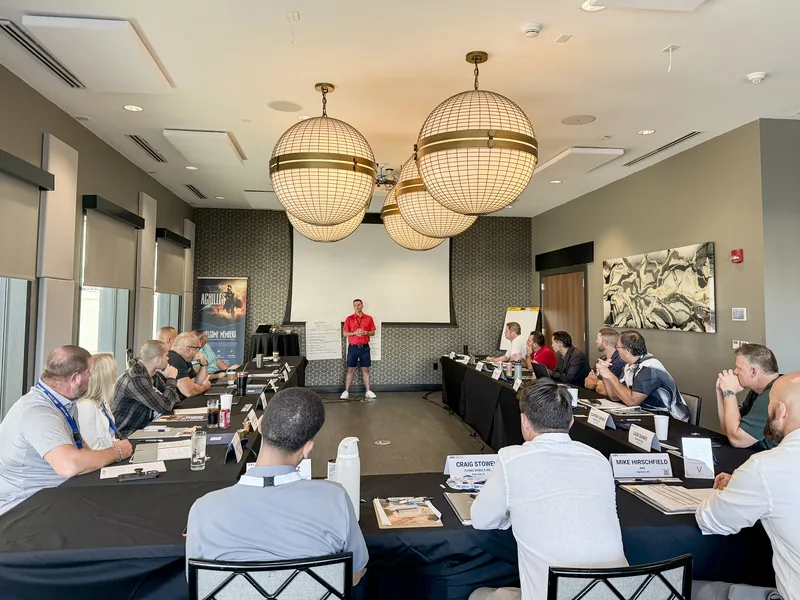
Imagine working through those questions with a group of successful dealers who understand your business, recognize the challenges you're facing, and are willing to share what's working in their own operations.
At ARC, the LinuS® composite gives dealers an opportunity to examine their businesses in considerable detail. Beyond the executive summary and year-over-year comparisons, dealers can examine operations, revenues, inventory, prospecting, sales, F&I, fixed operations, direct expenses, personnel expenses, semi-operational expenses, fixed expenses, and more. They can compare their performance with other dealers and relevant benchmarks.
But the real value goes beyond comparing numbers. It's understanding what's producing them.
Maybe your personnel expense percentage is higher than that of a comparable dealership. Is that necessarily bad? Not if the investment is producing an appropriate return.
Maybe another dealer is generating significantly more gross profit with a similar number of employees. What are they doing differently? Is it their inventory? Their processes? Their compensation structure? Their marketing? Their management? Their productivity? And what might you learn from their experience?
The composite helps identify the opportunity. The conversation helps us understand it.
Now consider how those conversations can inform your strategy. The financial analysis and peer perspectives help you recognize where your greatest opportunities may exist. The experience of other dealers helps you identify approaches that are already working. Their knowledge and relationships become additional resources you can draw upon. And the commitments you make, along with the ongoing review of your performance, help you evaluate whether your strategy is producing the desired results.
That's an important distinction. A 20 Group shouldn't simply help you identify what's wrong. It should help you determine what to do about it.
How Does Accountability Turn Strategy Into Execution?
One of the things I appreciate most about ARC 20 Groups is that the relationship doesn't end when the meeting does. Because identifying an opportunity and developing a strategy are only the beginning.
The real work happens when you return to your dealership. When you have to communicate the vision. When you have to challenge an existing process. When you have to develop your managers. When you have to lead people through change. And when something doesn't go according to plan.
That's where having the right peers around you can be incredibly valuable. People who understand what you're trying to accomplish. People who've encountered similar roadblocks. People who can help you recognize a mistake before you repeat one they've already made. And people who care enough to ask whether you've followed through on what you committed to doing.
At its best, a 20 Group becomes more than a place to compare financial results or exchange ideas.
It becomes an accountability system for change.
And when dealers remain connected between meetings, those relationships provide opportunities to work through challenges, evaluate progress, and continue moving forward.
There's another reason all of this matters. Your confidence affects the confidence of the people you're leading.
When your managers understand where the business is headed, why certain priorities matter, and how you intend to succeed, they're better equipped to lead their own teams.
You're not simply giving them something to do. You're helping them understand what they're working toward and why it matters.
That clarity can reduce doubt, create alignment, and strengthen the organization's ability to execute. And that's a powerful environment for developing confidence.
Not because everyone agrees with you. But because the right people are willing to challenge you, support you, and help you become more effective.
Are You Confident Heading Into 2027?
I don't know exactly what 2027 will bring. And neither does anyone else.
There will be opportunities. There will be challenges. There will be decisions that need to be made with incomplete information, unexpected problems that require immediate attention, and moments when the people around you need to see that you're prepared to lead.
That's the nature of owning and operating a dealership.
But I believe we can do a great deal to improve our ability to navigate whatever comes next.
We can develop a deeper understanding of our businesses. We can learn to recognize the systems producing our results. We can identify the opportunities that matter most, develop meaningful strategies, leverage the right resources, and establish the accountability necessary to execute. And we can surround ourselves with people who help us become better at all those things.
Because confidence isn't knowing exactly what's going to happen next.
It's having the capacity to execute when it matters most.
And if you're going to lead a dealership into 2027, I can't think of many things more important than that.
See More. Think Clearer. Lead Change.
Mike Hirschfield is an Executive 20 Group Moderator at ARC with more than 20 years of experience across dealership operations, executive leadership, dealer finance, consulting, and training. Mike believes no one person has all the answers. Better answers emerge when the right people, the right data, and the right questions come together. At ARC, Mike creates those environments, helping dealers see what they might otherwise miss, think more clearly about what's driving their results, and turn insight into meaningful change.
Frequently Asked Questions
How can dealer principals prepare their dealerships for 2027?
Preparation begins with understanding current financial and operational performance, recognizing the systems producing those results, identifying meaningful priorities, and developing a strategy supported by the people, processes, and accountability necessary to execute.
What does confidence mean for a dealer principal?
Confidence is the capacity to execute under pressure. It's more than appearing sure of yourself. It's being able to make sound decisions, recognize opportunities, develop people, and follow through when the stakes are high and the information is incomplete.
What are the four questions behind an effective dealership strategy?
Where are we choosing to play? How are we going to win? What resources will we leverage? How will we know it's working? The questions are adapted from Roger Martin and A.G. Lafley's Playing to Win framework.
Why is dealership financial benchmarking important?
Financial benchmarking helps dealers identify performance differences between their operations and comparable dealerships. Understanding why those differences exist can reveal opportunities to improve processes, productivity, and profitability.
How can an ARC 20 Group help with strategic planning?
A well-structured dealer 20 Group combines financial analysis, peer experience, operational insights, and accountability. Members can identify priorities, learn from strategies producing results in other dealerships, establish commitments, and receive support as they implement meaningful changes.
Sources
- Cox Automotive, "Dealer Sentiment Weakens as New-Vehicle Sales Outlook Slips," Cox Automotive (2026). www.coxautoinc.com
- National Automobile Dealers Association, "NADA Market Beat: New Light-Vehicle Sales on Pace to Meet or Exceed 16.0 Million Units in 2026," NADA (2026). www.nada.org
- National Independent Automobile Dealers Association, "August Used-Vehicle Data Shows Tightening Supply of Affordable Inventory," NIADA (2026). niada.com
- Roger L. Martin, "Strategy," rogerlmartin.com, on the Playing to Win framework developed with A.G. Lafley. rogerlmartin.com